
12701 Marblestone Dr #260, Woodbridge, VA 22192

Endodontist vs. Dentist: What is the Difference?



Understanding who to consult can significantly impact your treatment outcome when it comes to oral health. While general dentists address many dental issues, endodontists specialize in problems deep within the tooth. Let’s delineate the fundamental distinctions between an endodontist and a dentist to help you determine the appropriate professional when tooth discomfort arises.
What Does a Dentist Do?
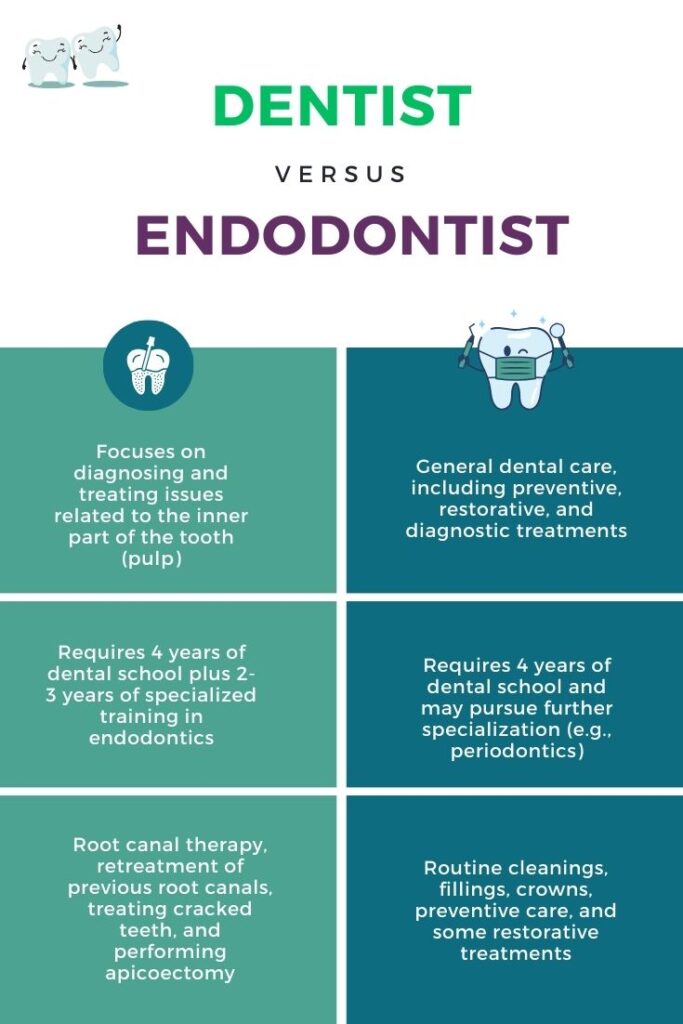
A general dentist serves as your primary dental healthcare provider. They offer preventative services such as cleanings, examinations, and X-rays. Dentists also perform restorative treatments, including fillings, crowns, and uncomplicated extractions. If you are looking for a dentist nearby, your local dental practice is typically your initial point of contact for routine checkups and mild to moderate dental concerns.
What Makes an Endodontist Different?
An endodontist is a specialist who diagnoses and treats tooth pain and performs root canal therapy. Endodontists have an extra two to three years of advanced training after graduating from dentistry school, focusing on the interior tissues of the tooth known as the dental pulp. This specific training prepares them to handle more complex problems, which normal dentists may send to a specialist.
When Should You See an Endodontist?
If you are experiencing intense tooth pain, prolonged sensitivity to hot or cold temperatures, or have a fractured or infected tooth, it may be advisable to consult an endodontist near you. For instance, if you have received a large filling and the pain continues, an endodontist can evaluate whether the pulp is infected and if root canal treatment is necessary. Another common situation involves trauma to the teeth resulting from a fall or sports injury. In such instances, an endodontist possesses the specialized tools and training to preserve your natural tooth.
Comparison: Endodontist vs. Dentist
| Category | General Dentist | Endodontist |
|---|---|---|
| Education | DDS or DMD (Doctor of Dental Surgery or Medicine) | DDS/DMD + 2-3 years of advanced endodontic training |
| Scope of Practice | Broad range of oral health services | Specializes in treating issues inside the tooth (pulp & roots) |
| Common Procedures | Exams, cleanings, fillings, crowns, extractions | Root canals, endodontic surgery, retreatments |
| Equipment Used | Standard dental tools | Advanced tools like microscopes and digital imaging |
| Patient Referrals | May refer complex root canal cases to endodontists | Typically receive referrals from general dentists |
| Treatment Focus | Preventive and general dental care | Saving natural teeth through root canal therapy |
| Appointment Length | Usually shorter, depending on the procedure | Typically longer due to complexity of treatment |
| Pain Management | Local anesthesia for most procedures | Specialized in pain management for root-related issues |
| When to See One | Routine care, cavities, cleanings, etc. | Severe tooth pain, abscess, or complications after a root canal |
Cost and Insurance Coverage
Endodontic procedures like root canals may be more costly than standard dental treatments; however, most dental insurance plans cover general and endodontic care. You should always verify your specific benefits with your insurance provider.
Ready to Take the Next Step?
Don’t delay addressing tooth discomfort until it becomes severe. Whether you require a standard dental examination or complex endodontic treatment, a qualified dental professional is readily accessible. For those residing in Woodbridge or adjacent communities such as Lake Ridge, Dale City, and Montclair, visit our dental office to arrange your appointment today and proactively manage your oral well-being with assurance.