12701 Marblestone Dr #260, Woodbridge, VA 22192

Does Dental Insurance Cover Implants?



Dental insurance may cover part of dental implant treatment, but benefits depend on the individual policy. At Parkway Smiles Dentistry’s dental implant placement service, patients in Woodbridge, VA, can explore implant treatment and discuss the procedures involved before reviewing their expected costs. Understanding coverage limits, exclusions, and alternative benefits can help you prepare financially before scheduling treatment.
Does dental insurance cover implants in Virginia?
Some dental insurance plans cover dental implants, while others exclude implant placement or limit benefits to specific parts of treatment. Coverage depends on your policy, annual maximum, missing-tooth exclusions, and the procedure being billed. Living in Virginia does not automatically make implant treatment a covered benefit.
Review your plan’s benefits booklet or contact your insurer to confirm whether implant placement, the implant crown, and related surgical procedures qualify for payment. Do not assume that coverage for a dental crown automatically includes the implant supporting it.
The American Association of Oral and Maxillofacial Surgeons explains that coverage can vary by insurance type, policy terms, and annual limits.
Which parts of dental implant treatment might insurance cover?
An insurance plan may cover certain components of implant treatment even when it does not cover the entire procedure. The exact benefit depends on the plan’s exclusions, fee limits, and coverage rules for each billed service.
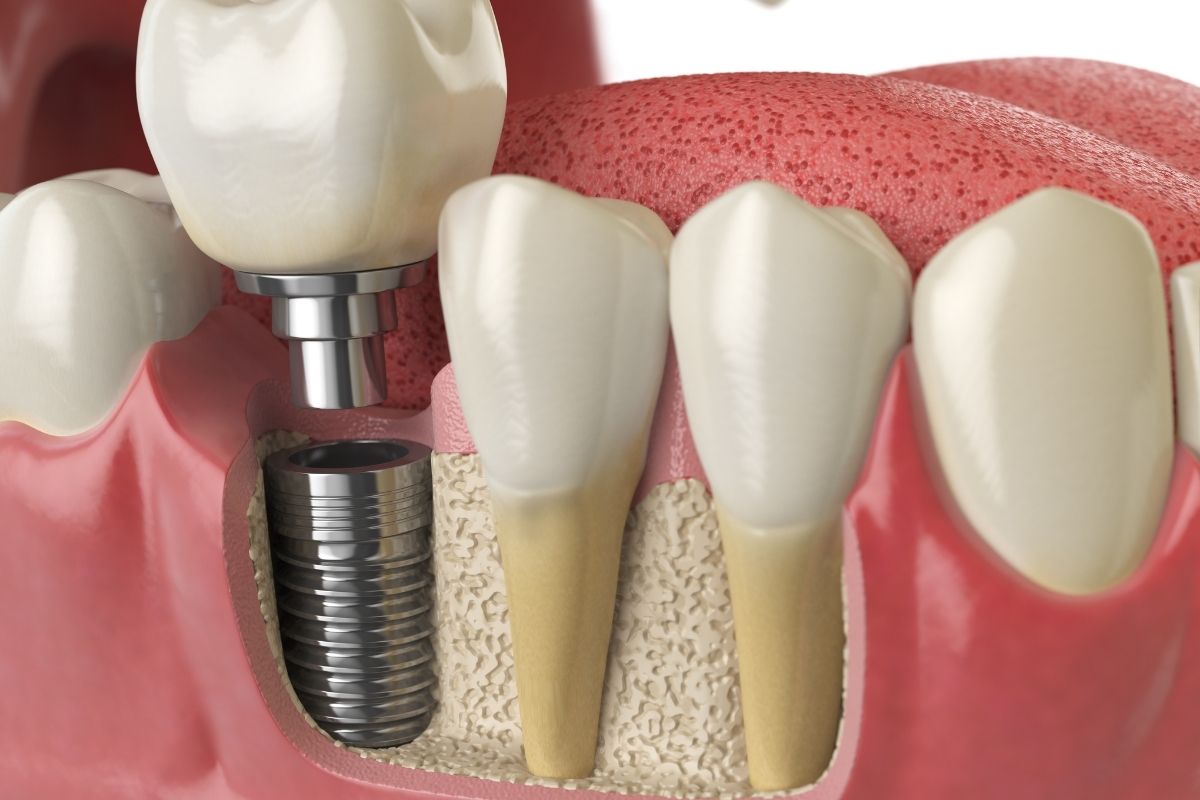
A dental implant restoration may involve several separately billed services:
- Implant placement: Surgical insertion of the titanium or other approved implant fixture into the jawbone.
- Abutment: The connector that attaches the replacement crown to the implant.
- Implant crown: The visible restoration that replaces the missing tooth.
- Tooth extraction: Removal of a damaged or nonrestorable tooth before replacement.
- Bone grafting: Placement of graft material when additional bone support is needed.
Your insurer may treat these services differently. For example, a plan might contribute toward an extraction or crown while excluding the implant fixture itself. Bone grafting may have separate coverage requirements.
Ask your dentist to identify each planned procedure and its applicable dental procedure code. Then request a benefit estimate for every component rather than asking only whether implants are covered.
What insurance exclusions should Woodbridge patients check?
Missing-tooth exclusions, waiting periods, annual benefit maximums, and plan-specific limitations can reduce or eliminate implant benefits. Their application depends on the written policy and the patient’s eligibility.
Check these four areas before committing to treatment:
- Missing-tooth clause: Some policies restrict benefits for teeth lost before coverage began.
- Waiting period: Certain plans require a specified enrollment period before covering selected services.
- Annual maximum: The insurer may pay only up to a fixed dollar amount per benefit year.
- Replacement restrictions: The policy may limit payment for replacement teeth or certain types of restorations.
The American Dental Association identifies annual maximums, preexisting-condition exclusions, and other benefit limitations as common features of dental plans.
A plan’s annual maximum is especially important for implant treatment because multiple procedures may be needed. If the insurer’s remaining benefit is limited, you may have substantial out-of-pocket costs even when some services qualify for coverage.
Does medical insurance cover dental implants?
Medical insurance does not routinely cover dental implants, but certain medically necessary oral procedures may qualify under specific policy terms. Coverage depends on the underlying medical condition, the procedure, and the insurer’s rules.
For example, an injury-related oral surgery claim may be evaluated differently from routine tooth replacement. However, this does not mean medical insurance will pay for the implant itself. Your medical insurer must confirm whether the proposed service qualifies.
Original Medicare generally excludes routine dental care, including most dental implants. Limited exceptions apply to certain dental services closely connected to covered medical treatment or qualifying hospital care. Some Medicare Advantage plans offer additional dental benefits, but their implant coverage varies.
If you have both medical and dental insurance, ask each insurer whether any part of your proposed treatment may qualify. Do not assume that one policy will cover charges denied by the other.
How can you verify implant coverage before treatment?
Request a written pretreatment estimate and confirm your benefits directly with your insurer before beginning implant treatment. This helps identify exclusions, estimated payments, and potential out-of-pocket expenses.
Follow these steps:
- Review your policy. Check the implant, oral surgery, major restorative, and missing-tooth provisions.
- Request a treatment plan. Ask your dentist to list the proposed procedures and applicable billing codes.
- Submit a predetermination. Have the dental office submit the treatment plan if your insurer offers this service.
- Call your insurer. Confirm your eligibility, remaining annual maximum, deductible, coinsurance, and waiting periods.
- Ask about timing. If treatment spans benefit years, confirm how the plan processes claims submitted in different years.
The ADA explains that predeterminations estimate potential benefits but do not guarantee payment. Eligibility, remaining benefits, and policy conditions can change before the claim is processed. Learn about dental insurance predeterminations.
Keep the insurer’s written response and ask which services remain your financial responsibility. A detailed estimate is more useful than a general statement that your plan covers restorative dentistry.
What can you do if dental insurance does not cover implants?
You can discuss phased treatment, available payment arrangements, and alternative tooth-replacement options with your dentist if your plan excludes implants. The appropriate approach depends on your oral health, treatment needs, and budget.
Ask for an itemized estimate that separates implant placement, the abutment, the crown, imaging, and any required bone grafting. This helps you understand which charges are eligible for benefits and which you must pay yourself.
If bone grafting is recommended, review how long after a bone graft you may be able to get dental implants. Healing time and bone readiness affect the treatment schedule, although your dentist must determine the appropriate timing for your case.
You can also ask whether your practice offers payment arrangements or an in-office membership plan. Confirm the plan’s actual terms, eligibility, and exclusions before enrolling. Do not assume that a discount plan is insurance or that it automatically includes implant surgery.
How can Parkway Smiles Dentistry help you plan implant costs?
Parkway Smiles Dentistry can evaluate your tooth-replacement needs and help you understand the proposed treatment before you make financial decisions. Patients in Woodbridge can discuss implant placement, the recommended treatment sequence, and the documentation needed to check insurance benefits.
If you are comparing treatment costs, arrange a consultation with a dentist to review your clinical needs and itemized estimate. Ask whether the office can submit a predetermination and explain which charges may remain your responsibility.
Visit the Parkway Smiles Dentistry contact page to request an appointment. You can also find the practice through its Google Maps listing.
Before starting treatment, confirm your insurer’s response and discuss any remaining financial questions with the dental team.
FAQs
Does dental insurance cover the full cost of implants?
Most plans do not guarantee full payment for implant treatment; coverage depends on policy limits, exclusions, and the procedures performed.
Are dental implants considered major restorative dentistry?
Some insurers classify implant-related services under major restorative benefits, but the classification and coverage depend on the individual policy.
Can I use dental insurance for bone grafting before implants?
Some plans cover qualifying bone grafting procedures, while others exclude them or impose specific medical and dental benefit requirements.
Does insurance cover an implant crown if the implant itself is excluded?
Possibly; an insurer may cover the crown under restorative benefits even when implant placement is excluded, subject to policy terms.
Should I get insurance approval before scheduling dental implants?
Yes, request a predetermination when available and verify benefits directly with your insurer, because an estimate does not guarantee claim payment.