12701 Marblestone Dr #260, Woodbridge, VA 22192

What to Expect at Your Dental Implant Consultation



A dental implant consultation helps determine whether an implant is appropriate for your missing tooth and what treatment may be required. At Parkway Smiles Dentistry’s dental implant placement service in Woodbridge, VA, patients can explore the implant process and discuss their individual treatment needs. The first visit focuses on evaluating oral health, reviewing relevant medical history, and developing a plan based on clinical findings.
What happens during a dental implant consultation?
Your dentist reviews your medical and dental history, examines your mouth, and evaluates whether an implant may be suitable. The appointment also helps identify factors that could affect treatment planning, healing, and the final restoration.
Your dentist may ask when you lost the tooth, whether you have experienced pain or infection, and whether you have received previous dental treatment in the area. You should also discuss your general health, current medications, allergies, and previous surgeries.
The dentist examines the missing-tooth site and surrounding teeth. They may assess your gums, bite, and available bone. These findings help determine whether additional evaluation or treatment is needed before implant placement.
What should you bring to your implant consultation?
Bring your medical history, current medication list, relevant dental records, and insurance information to help your dentist evaluate your needs and plan treatment. Recent dental X-rays may also be useful if they are available.
Prepare the following information before your appointment:
- Medication list: Include prescription medicines, over-the-counter drugs, and supplements you take.
- Medical history: Report conditions such as diabetes or bleeding disorders, along with relevant past surgeries.
- Dental records: Bring previous X-rays or treatment records if another dental office has them.
- Insurance details: Carry your dental insurance information if you want to investigate potential benefits.
- Questions about treatment: Write down concerns about the procedure, healing, cost, and maintenance.
Tell your dentist if you smoke or use nicotine products. These details may affect the assessment of healing and implant-related risks. Do not stop prescribed medication before your appointment unless your prescribing clinician advises you to do so.
Will you need X-rays or a 3D scan during the consultation?
Your dentist may recommend dental X-rays or a three-dimensional scan when the images are needed to assess the implant site and plan treatment. The type of imaging depends on your examination and the information required.
Conventional dental X-rays can help evaluate teeth and surrounding bone. Cone-beam computed tomography (CBCT) provides three-dimensional images that may help assess bone dimensions and important anatomical structures before surgery.
Not every patient needs every type of scan. The dentist should select imaging based on your clinical needs and existing records.
The ADA and the American Academy of Oral and Maxillofacial Radiology recommend selecting dental imaging according to the patient’s condition and the diagnostic information required.
What factors determine whether you are a candidate for dental implants?
Implant candidacy depends on your jawbone, gum health, medical history, and ability to maintain the implant after placement. Your dentist evaluates these factors before recommending a treatment plan.
Important considerations include:
- Jawbone volume: The implant needs adequate bone support for placement and stability.
- Gum health: Active gum disease may need treatment before implant surgery.
- General health: Certain medical conditions and medications can affect healing or surgical planning.
- Oral hygiene: Consistent brushing, interdental cleaning, and professional dental care help maintain the tissues around an implant.
- Tobacco use: Smoking can increase the risk of complications and impaired healing.
An initial consultation does not automatically establish that you are ready for surgery. Your dentist may recommend additional evaluation or treatment before making a final decision.
If the jawbone cannot adequately support an implant, bone grafting may be considered. Read how long after a bone graft you may be able to get dental implants to understand why bone healing can affect the treatment timeline.
What will your dentist explain about the implant procedure?
Your dentist will explain the recommended treatment sequence, the purpose of each stage, and any additional procedures identified during your evaluation. The plan depends on your anatomy, oral health, and restorative needs.
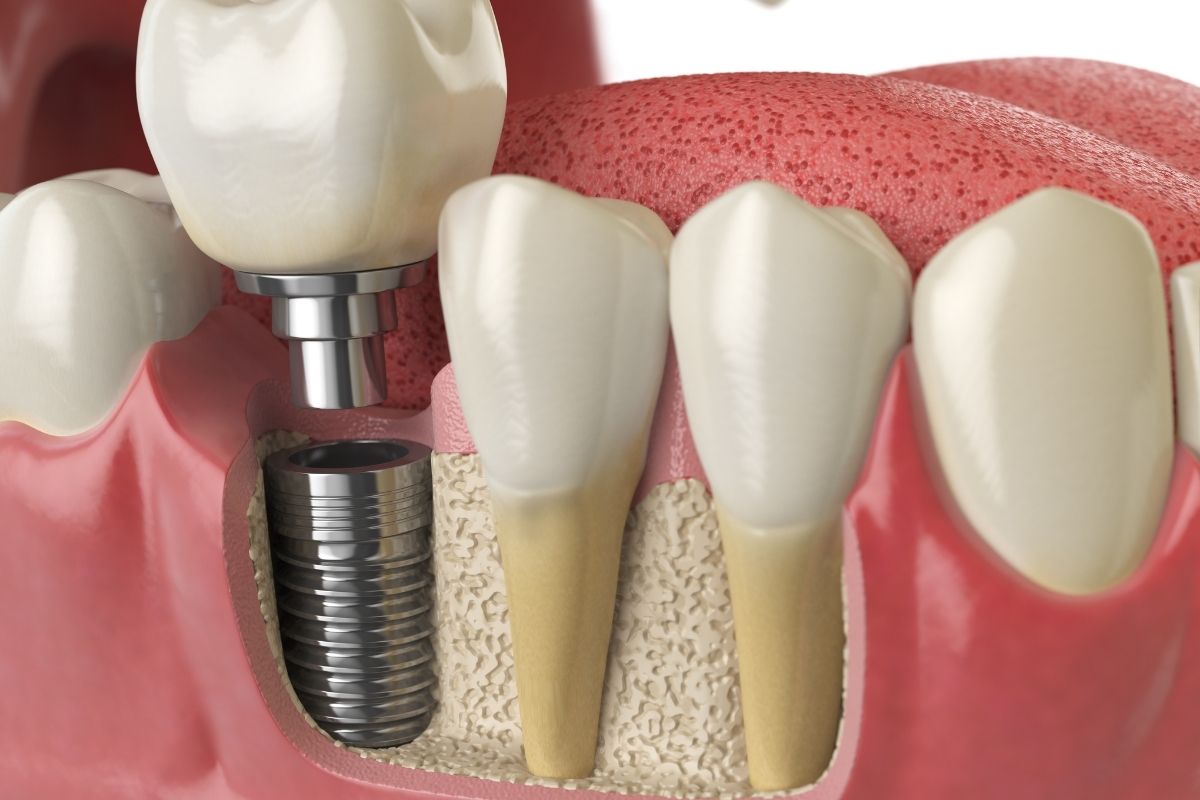
Dental implant treatment commonly involves placing an implant fixture in the jawbone, allowing time for healing and integration, and attaching an abutment and replacement crown when appropriate. Some cases require preliminary treatment, such as tooth extraction or bone grafting.
Your dentist should explain the expected sequence and whether treatment will involve multiple appointments. Healing time varies with the procedure, bone quality, and individual response. Your dentist will provide a more specific estimate after reviewing your clinical findings.
The consultation is also the time to discuss potential risks, including infection, damage to nearby structures, implant failure, and problems affecting the surrounding gum or bone. Ask how these risks apply to your case and what follow-up care will be required.
How much do dental implants cost, and will insurance help?
The cost of dental implants depends on the procedures required, the restoration selected, and the complexity of your case. Your consultation helps identify the services needed for an individualized estimate.
Ask for an itemized treatment estimate that separates implant placement, the abutment, the crown, imaging, and any recommended bone grafting or extraction. This makes it easier to understand the proposed treatment and compare costs.
Dental insurance may cover some components of implant treatment, depending on your policy. Annual maximums, exclusions, waiting periods, and missing-tooth clauses may limit benefits. Request a pretreatment estimate from your insurer when available, and remember that it does not guarantee final payment.
If you are unsure about coverage, review the policy with your insurer before committing to treatment. Your dental office may also explain available payment arrangements, if offered.
What questions should you ask during the consultation?
Ask about your suitability, treatment stages, expected healing time, potential risks, total fees, and long-term maintenance before deciding whether to proceed. Clear answers help you understand the recommended plan and any alternatives.
Use this checklist during your appointment:
- Why is an implant appropriate for my missing tooth?
- Do I need gum treatment, an extraction, or bone grafting first?
- Which imaging tests are necessary, and why?
- How many appointments may be required?
- What complications should I understand?
- What is included in the estimated treatment cost?
- How should I clean and maintain the implant after restoration?
Your dentist should explain the clinical reasons behind the recommendation and discuss reasonable alternatives when appropriate. You do not have to decide on surgery during the initial consultation.
What happens after your dental implant consultation?
After the consultation, your dentist will explain the next steps, which may include additional testing, preliminary treatment, insurance review, or scheduling implant surgery. The timeline depends on your examination findings and treatment requirements.
Some patients can proceed to treatment planning without additional procedures. Others may need periodontal care, tooth extraction, or bone grafting before implant placement. Your dentist will explain the order of treatment and when your case is ready for the next stage.
If you are considering dental implants in Woodbridge, VA, contact Parkway Smiles Dentistry to request an appointment and discuss your tooth-replacement needs. Bring your questions and relevant records so the dental team can assess your situation and explain the available next steps.
5. FAQ Section
How long does a dental implant consultation take?
The appointment length depends on the examination, medical history review, imaging needs, and complexity of your case.
Is a dental implant consultation painful?
The consultation is generally noninvasive, although you may experience minor discomfort if the dentist examines a sensitive area.
Can I get dental implants at my first consultation?
Implant placement is not usually performed during the initial consultation because the dentist must first assess your health and complete treatment planning.
Do I need a referral for a dental implant consultation?
Referral requirements vary by dental practice, insurance plan, and clinical circumstances, so confirm the requirements when scheduling your appointment.
What if I need a bone graft before getting an implant?
Your dentist may recommend bone grafting when the jawbone lacks sufficient support, and implant placement may need to wait until healing is adequate.