
12701 Marblestone Dr #260, Woodbridge, VA 22192

How Parkway Smiles Uses Digital X-Rays to Protect Your Dental Health


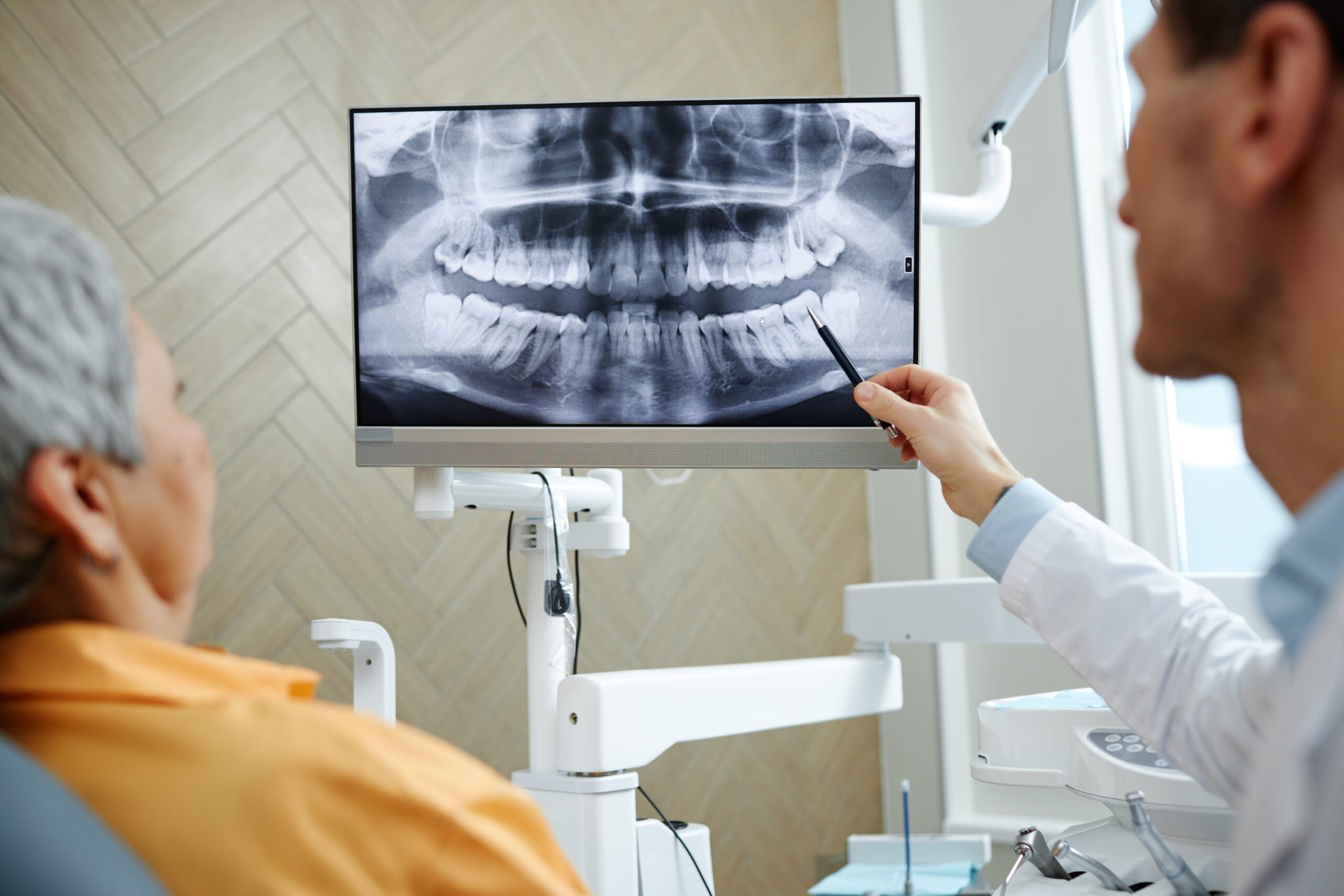
When you visit a dentist, what they can’t see with the naked eye can be just as important as what they can. Hidden decay between teeth, early-stage bone loss, impacted teeth, and infections developing beneath the gum line — none of these show up during a visual exam alone. That’s exactly why digital X-rays are one of the most valuable diagnostic tools at Parkway Smiles Dentistry, serving patients throughout Woodbridge, VA and the surrounding Prince William County area.
If you’ve ever wondered why your Woodbridge dentist takes X-rays or whether they’re really necessary, this article breaks it all down — clearly and honestly.
What Makes Digital X-Rays Different From Traditional Film X-Rays?
Traditional dental X-rays used photographic film that had to be chemically developed, stored physically, and often re-taken if the image came out unclear. The process was slower, and it exposed patients to higher levels of radiation than modern alternatives.
Digital radiography replaces that film with an electronic sensor. The sensor captures images almost instantly and sends them directly to a chairside monitor — no darkroom, no waiting, no guesswork.
Here’s what that means practically for patients at Parkway Smiles:
- Significantly lower radiation exposure — digital X-rays use up to 80–90% less radiation than conventional film X-rays, according to the American Dental Association (ADA).
- Faster results — images appear on screen within seconds, allowing your dentist to review findings with you during the same appointment.
- Higher image clarity — digital sensors produce sharper, higher-contrast images that can be enlarged, color-enhanced, or compared side by side.
- Better record-keeping — files are stored electronically, making it easy to compare images across visits and track changes over time.
What Can Digital X-Rays Actually Detect?
This is where the clinical value becomes clear. Even patients with no visible symptoms or tooth pain can have active dental problems developing beneath the surface.
- Interproximal decay — cavities forming between teeth where a mirror and probe can’t reach
- Bone loss — an early warning sign of periodontal (gum) disease, which the CDC reports affects nearly half of adults over 30 in the U.S.
- Impacted teeth — especially wisdom teeth that haven’t erupted and may be affecting adjacent teeth
- Abscesses and cysts — infections or fluid-filled sacs around tooth roots that can cause serious complications if left untreated
- Root fractures — hairline cracks that are invisible during a clinical exam but can lead to tooth loss
- Developmental abnormalities — particularly important in younger patients whose permanent teeth are still forming
Early detection means smaller, simpler, less expensive treatment. A cavity caught early is a small filling. Left undetected, that same decay can progress to a root canal or extraction.
Is Radiation from Dental X-Rays a Real Concern?
It’s a fair question, and one worth answering directly. All X-rays involve some level of ionizing radiation — that’s simply the physics of how the technology works. However, context matters enormously.
A full set of digital dental X-rays exposes a patient to roughly 0.005 millisieverts (mSv) of radiation — far less than the natural background radiation a person absorbs in a typical day just from the environment. For comparison, a cross-country flight exposes passengers to more radiation than a full dental X-ray series.
At Parkway Smiles, X-rays are taken based on each patient’s clinical needs — not on a fixed schedule. Patients with low decay risk and good oral health may only need X-rays every 18–24 months. Children, patients with a history of frequent cavities, or those undergoing active dental treatment may need them more regularly. This individualized approach reflects the ADA’s guidelines on appropriate radiograph selection.
Lead aprons and thyroid collars are used during imaging as an added precaution, particularly for children and pregnant patients.
Digital X-Rays as Part of a Comprehensive Care Approach
Digital radiography doesn’t exist in isolation — it’s one piece of a larger diagnostic picture at Parkway Smiles. Your nearest dentist will use X-ray findings alongside a clinical exam, gum health measurements, and your health history to develop a complete, accurate picture of your oral health.
This integrated approach supports not just your dental health, but your overall systemic health. Research has increasingly linked chronic oral conditions — particularly periodontal disease — to elevated risk for cardiovascular disease, diabetes complications, and other systemic concerns. Catching these issues early through thorough diagnostics helps patients get ahead of problems rather than react to them.
If you’re overdue for a dental visit or have questions about your X-ray history, the team at Parkway Smiles is ready to help.
Why Patients in Woodbridge, VA Choose Parkway Smiles for Preventive Dental Care
Parkway Smiles has built its reputation in Woodbridge on a simple principle: thorough, honest, patient-centered care. That means taking the time to explain what X-rays show, answering questions without rushing, and making decisions collaboratively with each patient.
The practice uses state-of-the-art digital X-ray technology as part of every comprehensive exam — not as an upsell, but as a standard of care that helps catch problems before they become painful or costly.
For families, busy professionals, and anyone looking for a trustworthy dentist near Woodbridge, that level of diagnostic thoroughness matters.
Conclusion
Digital X-rays represent one of the most meaningful advances in preventive dentistry over the past two decades. At Parkway Smiles Dentistry in Woodbridge, VA, this technology is a routine part of every comprehensive exam — offering patients earlier detection, greater safety, and a clearer window into their long-term oral health.
If it’s been a while since your last dental X-rays, or if you’re searching for a reliable dentist in Woodbridge, VA who takes preventive care seriously, Parkway Smiles is accepting new patients and ready to help.
Frequently Asked Questions
Q1: How often should I get dental X-rays?
It depends on your individual oral health history. Adults with good oral health and low decay risk typically need X-rays every 18–24 months. Patients with a history of cavities, active gum disease, or ongoing treatment may need them more frequently. Your Parkway Smiles dentist will recommend a schedule based on your specific needs.
Q2: Are digital dental X-rays safe during pregnancy?
Modern digital X-rays expose patients to very low radiation levels. However, elective X-rays are generally postponed until after delivery as a precaution. If a dental X-ray is clinically necessary during pregnancy, a lead apron and thyroid collar are used to minimize any exposure. Always inform your dentist if you are or may be pregnant.
Q3: Why does my dentist take X-rays if my teeth don’t hurt?
Dental problems — including cavities, bone loss, and infections — often develop without any noticeable pain until they’re advanced. X-rays allow your dentist to identify these issues in their earliest stages, when treatment is simpler and less costly. Waiting for symptoms means waiting until the problem has already progressed.
Q4: What is the difference between a bitewing X-ray and a panoramic X-ray?
Bitewing X-rays capture a focused view of the upper and lower back teeth in a specific section of the mouth — ideal for detecting decay between teeth and assessing bone levels. A panoramic X-ray captures the entire mouth, jaw, and surrounding structures in a single image. Panoramic X-rays are used to evaluate impacted teeth, jaw health, and overall dental development. Your dentist selects the type based on the diagnostic purpose.
Q5: Does Parkway Smiles use digital X-rays for children?
Yes. Digital X-rays are particularly beneficial for pediatric patients because of the significantly lower radiation exposure compared to traditional film. Children may need X-rays more frequently than adults depending on their cavity risk and how quickly their teeth are developing. The team at Parkway Smiles always discusses the clinical need for X-rays with parents before proceeding.